
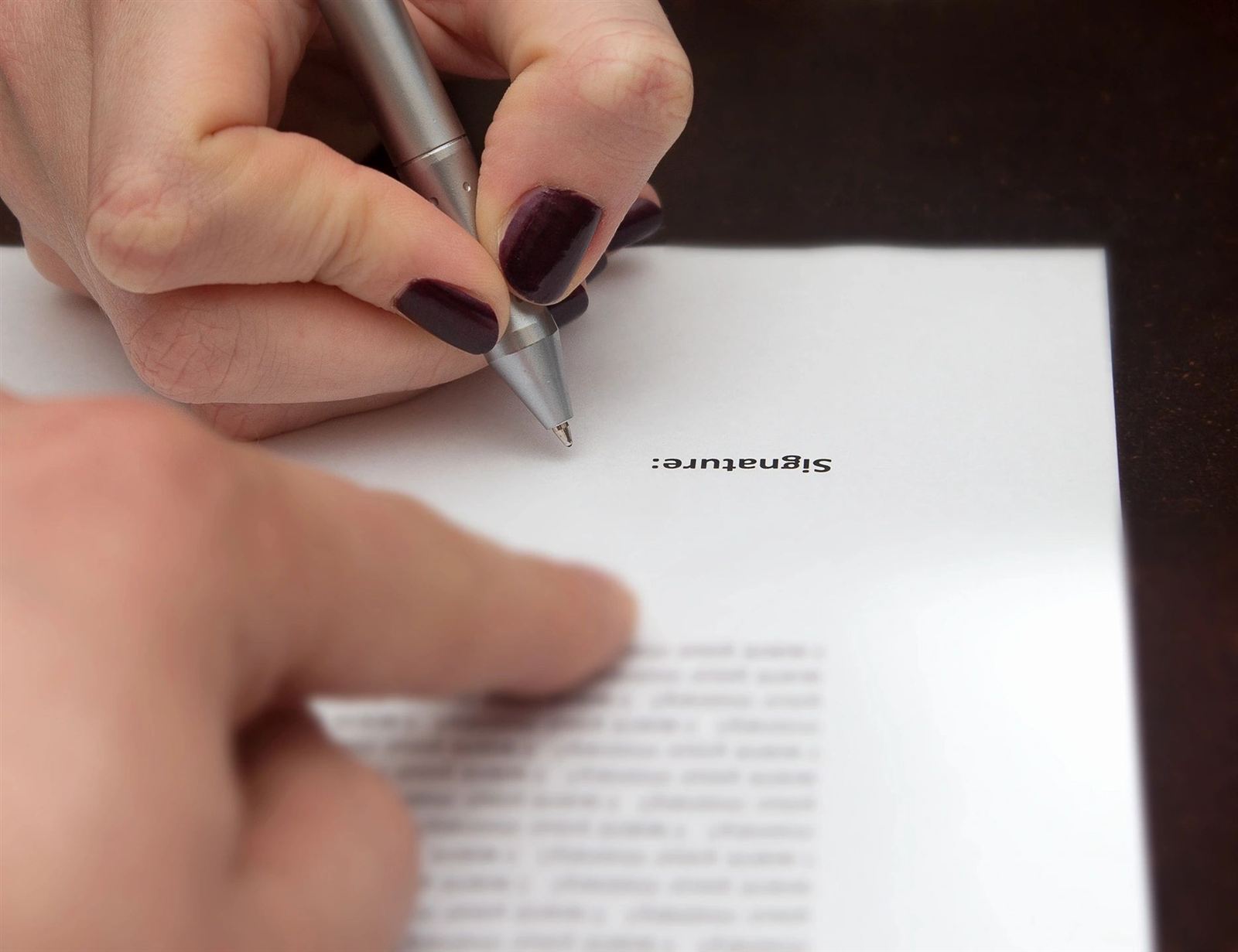
Signature by Mark: Notarizing for Someone Who Can’t Sign
When a stroke, arthritis, injury or illiteracy makes a signature impossible, California law allows a mark instead. Here is how to do it correctly.
Home Notary Guide Signature by Mark
Quick answer
If a signer can’t write their name, they can sign by making a mark (such as an “X”) under Civil Code § 14. The mark must be witnessed by two people who sign the document as witnesses; one of them writes the signer’s name next to the mark. The signer is still identified by ID or credible witnesses, and makes the same mark in the notary’s journal, witnessed and labeled the same way. The notary then completes a normal acknowledgment or jurat.
- Every notary NNA certified
- $100,000+ E&O insurance per notary, plus the $15,000 state bond
- 4.9★ on Google, 115 reviews
- 12,000+ documents notarized
On this page
Who signs by mark
California’s general definition of “signature” includes a mark, when the person can’t write their name (Civil Code § 14). We see it most often in hospitals and care homes: a parent after a stroke, someone with advanced Parkinson’s or arthritis, a patient with both hands bandaged, or a signer who never learned to write. The mark can be an “X” or any other mark the signer can make.
Signing by mark is about physical ability, not understanding. The signer must still know what they’re signing and want to sign it. If they can’t communicate that, a mark won’t solve the problem.
The requirements, step by step
- Identify the signer. The person signing by mark must be identified with satisfactory evidence: an acceptable ID or credible witnesses.
- Two witnesses watch the mark being made on the document. Both witnesses sign their own names on the document as witnesses.
- One witness writes the signer’s name next to the mark, then signs their own name as a witness.
- The signer makes their mark in the notary’s journal. To count as a signature there, it must also be witnessed: a witness writes the signer’s name next to the journal mark and signs as a witness.
- Thumbprint if required. For deeds and powers of attorney, the journal also gets a thumbprint (or another finger if the right thumb isn’t available).
- The notary completes the certificate: the standard California acknowledgment or jurat. Nothing special is added to the certificate wording.
What it looks like on the page
The Handbook’s example shows a power of attorney signed by “Bob Smith.” Next to the signature line, Bob makes his mark. Witness #1 writes “Bob Smith” beside the mark and signs as a witness; Witness #2 signs as a witness. The acknowledgment below reads exactly like any other: “personally appeared Bob Smith, who proved to me on the basis of satisfactory evidence…”
Example signature block
Signature: X (Bob Smith, his mark)
Witness #1: ______________________ (wrote the signer’s name and signs here)
Witness #2: ______________________
Who can be a signature-by-mark witness
The law asks only that two people witness the mark and sign as witnesses. They are verifying one thing: that they saw this person make this mark. The notary doesn’t have to identify these witnesses or have them sign the journal, unless they are also serving as credible witnesses to prove the signer’s identity. In that case their signatures and ID details go in the journal.
Practical advice: choose adults who can read and write, are present for the whole signing, and aren’t named in the document. Even though the mark statute doesn’t bar interested witnesses, many documents (and the organizations receiving them) do. An advance health care directive, for example, has its own witness rules.
Signature by mark vs. other options
| Situation | Usual approach |
|---|---|
| Can’t write a name but can make a mark and understands the document | Signature by mark (this page) |
| Can sign, but shakily or differently than their ID | Signs normally; a signature doesn’t have to match the ID exactly |
| Can’t make any mark at all | Talk to an attorney about alternatives (for example, an existing agent under a power of attorney signing in that capacity) |
| Can’t appear before a notary | Possibly a proof by subscribing witness, with significant limits |
California has no procedure for a notary or a family member to sign someone’s name for them in front of a notary. If the signer can make a mark, use the mark.
Common questions
Does a signature by mark need two witnesses in California?
Yes. Two people must witness the mark and sign the document as witnesses, and one of them writes the signer’s name next to the mark.
Can the notary be one of the witnesses?
The notary is performing the notarization and keeps the journal entry, so plan on two other people. If you can’t find witnesses, tell us when you book; we can often arrange them for an additional fee.
Is a signature by mark legally valid?
Yes. Civil Code § 14 defines “signature” to include a mark when the person can’t write their name, provided it is witnessed as required.
Does the signer still need ID?
Yes. Signing by mark only changes how the signature is made, not how the signer is identified. Use acceptable ID or credible witnesses.
Can someone sign by mark on a deed or power of attorney?
Yes. The usual rules for those documents still apply, including the journal thumbprint. If the signer can’t give a thumbprint, the notary notes the physical condition in the journal.
Related guides
- Hospital NotaryBedside notarizations in hospitals, nursing homes and hospice, 24/7.
- Credible WitnessesHow to be notarized without ID: who qualifies and what they swear to.
- Types of WitnessesThe three witness roles, who can serve, and which documents need them.
- Power of AttorneyDurable, financial and limited POAs: notary vs. witnesses, recording and copies.
Need a notary? We come to you.
Mobile notary across Los Angeles County, open 24/7 by appointment. Book online or call (424) 484-9268.